My work at the centre of government focused on improving how major digitally-enabled change programmes are delivered.
At the time, government had approved more than £80 billion for 41 major change programmes across 10 departments and one public body. At least 19 of these, costing almost £38 billion, were primarily digitally-enabled. These ranged from the Home Office’s £145 million Smarter Working Programme to HM Courts & Tribunals Service’s £1.65 billion Reform Programme and Universal Credit, estimated at £13.5 billion.
This was a large and increasingly digitally-enabled portfolio, with significant savings already assumed in fiscal plans. Yet the UK’s track record in delivering complex digital programmes had been mixed. The question was how to improve the likelihood of successful delivery.
My work spanned a range of initiatives to strengthen cross-government delivery capability.
I co-authored the 7 Lenses of Transformation, published in 2018, providing a practical framework and a shared language for designing and evaluating large government change programmes.
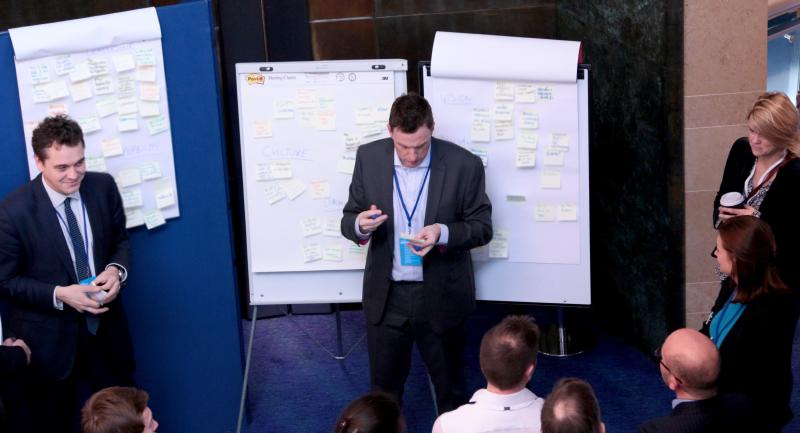
I helped create the Transforming Together events to strengthen links across the government transformation community and better understand departmental needs. We established the Transformation Peer Group, a network for senior responsible owners (SROs), run by the Infrastructure and Projects Authority (IPA) and Government Digital Service (GDS), to share challenges and prompt action.
Many of these approaches were developed further and featured in The Art of Brilliance: A Handbook for Leaders of Transformation Programmes, published in 2025 by the National Infrastructure and Service Transformation Authority, with a foreword by Sir Mark Sedwill, Cabinet Secretary.
I also contributed to public forums such as the Major Projects Association, to develop national thinking on digitally-enabled major programmes.
In my Cabinet Office role at the Government Digital Service, I led the production of the Government Transformation Strategy. I also engaged extensively with international governments seeking to learn from the UK’s approach, and later worked on formalising the UK’s commercial offer to overseas administrations.