I was appointed as a non-executive director at Northumbria Healthcare NHS Foundation Trust in 2019, where I chaired the board’s digital committee and oversaw a period of significant investment in IT, digital and data.
The context for my appointment dates back to the WannaCry ransomware incident in 2017. Although it was not aimed at the NHS, 80 of 236 hospital trusts in England were affected, and Northumbria was among the worst hit.
This led to a commitment to invest in rebuilding and strengthening the Trust’s digital capability, including my appointment as the first “Digital NED” on the board. A sustained programme of recovery and improvement followed, beginning with core infrastructure and progressing to more advanced digital delivery.
The organisation’s sustained focus on digitally-enabled services means it is now a leading digital trust within the NHS.
In this interview, recorded towards the end of my six-year term on the board, I reflect on the Trust’s progress in digital health and data-driven care. Topics include the shift to electronic patient records, digitising more than 200 million pieces of paper and improving operational efficiency, as well as the deployment of tools such as NerveCentre and DrDoctor to support real-time hospital management and patient self-scheduling. I also discuss the use of AI in stroke care.
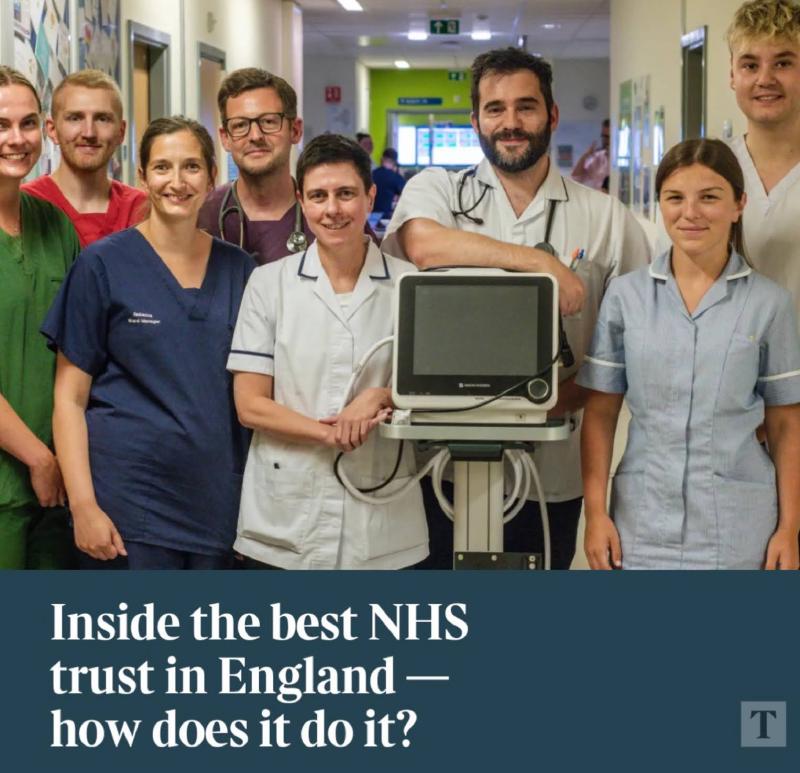
The Times ran an article on 8 August 2025 about the Trust (paywall).
Against all odds, Northumbria Healthcare NHS Foundation Trust tops the list for performance and patient satisfaction